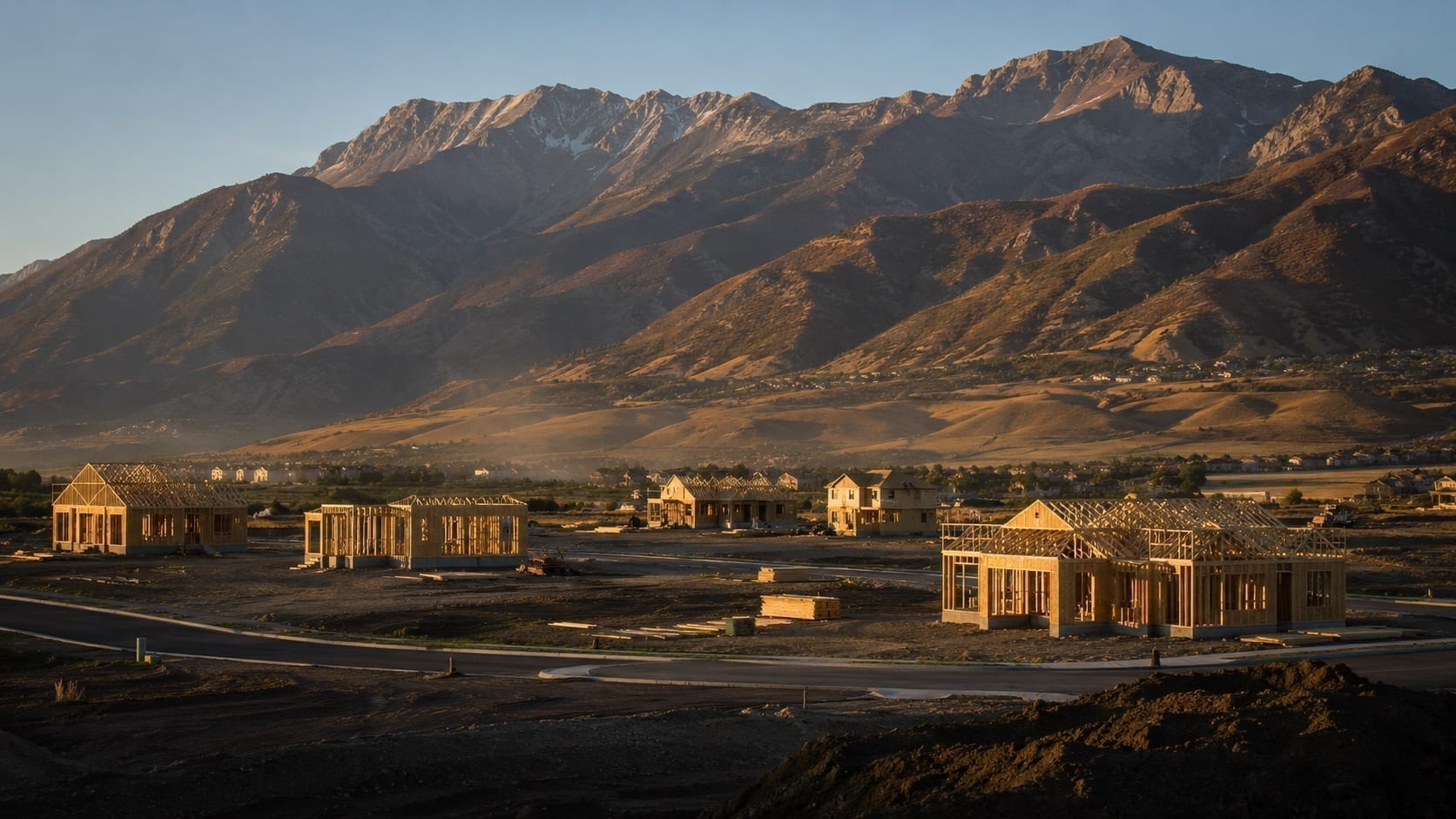


10 Tips for First Time Homebuyers
Last updated: May 8, 2026 with current Utah market and lending guidance.
Buying your first home is one of the largest financial decisions most people will ever make. The 2026 Utah market is more buyer-favorable than it has been in years, but rates are still in the 6 to 7 percent range and the rules around buyer-agent representation changed materially after the August 2024 NAR settlement. Here are 10 specific things every first-time Utah homebuyer should know before they start touring homes.
1. Get Pre-Approved Before You Start Looking
Pre-qualification (a soft estimate from a lender based on what you tell them) is not the same as pre-approval (a real commitment from a lender based on verified income, credit, and assets). In Utah’s 2026 market, sellers routinely reject offers without an underwritten pre-approval letter attached. Get the real pre-approval before you tour homes. Most reputable Utah lenders can complete this in 24 to 72 hours.
2. Understand the Total Cost, Not Just the Down Payment
First-time buyers often anchor on the down payment and forget about closing costs, prepaid items, moving costs, and the cash reserves a lender wants to see. On a $500,000 first home with 5 percent down, you are looking at roughly $25,000 down plus $10,000 to $15,000 in closing costs and prepaid items. Plan for 7 to 8 percent of the purchase price in total cash needed at closing.
3. Know What Utah First-Time Buyer Programs Exist
Utah Housing Corporation (UHC) offers several products specifically for first-time buyers, including FirstHome, HomeAgain, Score, and NoMI. These can include down payment assistance, reduced rate options, and lower mortgage insurance costs. Eligibility depends on income, credit, and home price. Several Salt Lake Valley cities also offer their own first-time buyer programs. Ask your lender to run scenarios with and without UHC programs to see which gives you the best total cost.
4. Sign a Buyer-Agent Agreement Before You Tour
Since the August 2024 NAR settlement, you must sign a buyer-agent representation agreement before any home tour. This is a real document that explains what your agent will do, what they will be paid, and by whom. Read it. Understand it. Ask questions. A good buyer agent will walk you through every line. See our 2024 settlement update for full context on what changed.
5. Account for Mortgage Rates in Your Affordability Math
Rates in 2026 are running 6 to 7 percent for 30-year conventional. That is significantly higher than the 2.5 to 3.5 percent rates that fueled the 2020 to 2022 buying frenzy. Run your affordability math at today’s actual rates, not at last decade’s rates. A common rule of thumb is housing should not exceed 28 to 33 percent of gross monthly income, though some lenders allow up to 43 to 50 percent. The right number is the one that does not make you house-poor.
6. Get a Home Inspection Even in a Hot Market
One of the painful lessons from the 2021 to 2022 frenzy is that buyers who waived inspections to win bids ended up with surprise foundation, roof, and plumbing issues that cost tens of thousands to fix. The 2026 market is meaningfully more buyer-favorable. You can do a real inspection now without losing the deal. Pay the $400 to $600. The information is worth far more than that.
7. Understand HOA Fees and Restrictions Before You Commit
Many Wasatch Front communities have HOAs, especially newer master-planned developments in Daybreak, Anthem, Suncrest, and similar areas. HOA fees can run anywhere from $40 a month to $400+ depending on the community. HOAs also enforce architectural standards, landscaping requirements, and restrictions on things like RV parking and rental rules. Read the HOA disclosures completely before you commit. Some HOAs are great. Some are restrictive in ways that surprise buyers later.
8. Pay Attention to School Catchment, Even If You Do Not Have Kids
School catchment lines drive resale value across the Wasatch Front. Two similar homes one block apart can have a 5 to 15 percent price difference if one is in a sought-after catchment and the other is not. Even if you do not have kids, your future buyer might. Research the catchment for any specific home address and verify with the school district directly because boundaries shift in fast-growing areas like Herriman and Daybreak.
9. Do Not Stretch to Win a Bidding War
The 2026 Utah market does not have many bidding wars on homes priced reasonably. When they do happen, it is usually on the most desirable properties in the most sought-after neighborhoods, which are also the ones where stretching to win can leave you with negative equity if the market dips. Set your maximum number before you start touring and commit to it. The right home for you is the one you can afford comfortably, not the one you barely beat someone else on.
10. Use Your Inspection Findings to Negotiate
The post-inspection negotiation is where buyers in 2026 have the most leverage. If the inspection identifies real issues, your options are: (a) seller fixes them before close, (b) seller credits money at close to cover the fix, or (c) you walk away. In a balanced market like 2026, sellers usually pick (a) or (b) for any reasonable issue. Use this leverage; it is real.
Frequently Asked Questions
How much money do I need to buy a first home in Utah?
Plan for 7 to 8 percent of the purchase price in total cash needed at closing, which covers down payment plus closing costs and prepaid items. On a $500,000 home that is roughly $35,000 to $40,000 cash. FHA, VA, and Utah Housing programs can reduce this. Talk to a lender about scenarios.
What is a good credit score to buy a home in Utah?
Most conventional loans want 620+. FHA loans accept 580+ in many cases. The best rates start around 740+. If you are below those thresholds, ask your lender what specific actions would move you up before you start shopping for homes.
Should I rent or buy in Utah right now?
It depends on how long you plan to stay and your local rent versus mortgage math. The general rule of thumb is buying makes sense if you plan to stay at least 5 years and your total monthly housing cost is within reach. In some Wasatch Front markets renting is currently cheaper than buying for the same property. We can run that comparison for you on a specific home.
What does the home buying process look like step by step?
- Get pre-approved with a lender. 2) Sign a buyer-agent agreement and define your search criteria. 3) Tour homes. 4) Submit an offer. 5) Negotiate terms. 6) Earnest money to title. 7) Inspection and due diligence. 8) Loan underwriting and appraisal. 9) Final walkthrough. 10) Close and get keys.
How long does it take to buy a home in Utah?
From the day you go under contract to closing typically takes 30 to 45 days. The search side varies, some buyers find a home their first weekend out, others take a few months. In 2026 with more inventory, the search side is faster than it was in 2021 to 2022.
Are mortgage rates going to come down soon?
This is a Federal Reserve and bond market question. We do not forecast rates and you should be skeptical of anyone who does. Plan around the rates that exist today. If rates fall significantly later, you can refinance.
What are common first-time buyer mistakes in Utah?
The most common: shopping before getting pre-approved, ignoring HOA disclosures, waiving inspections to win bids, stretching beyond comfortable affordability, ignoring school catchment for resale value, and choosing the wrong loan product. The first-time buyer programs through Utah Housing can save real money but only if you ask your lender about them up front.
Ready to Talk About Your First Home?
The Wasatch Front is one of the more buyer-friendly markets in the country in 2026, but you still need a clear plan. Our Buyer Concierge Service walks first-time buyers through pre-approval, search, offer, inspection, and closing. Call 801-999-8005 or email hello@krisbowen.com.
For more market context, see our Spring 2026 Utah Market Update and Buying with Us. Looking in a specific city? South Jordan, Sandy, Draper, Herriman, and Daybreak.